Finding yourself with a smaller social circle as you move into your 50s and beyond is a far more common experience than many realise. For decades, our social lives are often built around external structures: the frantic pace of the school run, the daily interactions at a busy workplace, or the shared activities of our children. When these structures shift—as careers wind down, children move away, or we find ourselves in a new suburb after a relocation—the natural "social glue" that held our networks together can begin to thin. It isn’t a sign that you’ve done something wrong; it’s simply a reflection of a life in transition. In Australia, where we often value our independence, admitting that you’d like to meet new people can sometimes feel vulnerable, but it is a vital step toward a fulfilling next chapter.
The reality is that meeting people after 50 requires a shift in mindset. In our younger years, socialising often happened to us by default. In midlife, it becomes something we need to pursue with a bit more intention. Whether it’s due to a divorce, the loss of a partner, or simply the natural drifting apart of old friends whose interests no longer align with yours, the result is the same: a need to broaden your horizons. This doesn't mean you need to become an overnight extrovert or spend every night out on the town. Instead, it’s about recognizing the opportunities that already exist in your daily routine and being willing to nudge the door open just a little wider.
"The goal isn't to replace the deep friendships of the past, but to create space for new connections that reflect who you are today."
Often, the challenge isn't a lack of people, but a lack of context. When you are no longer seeing the same colleagues or parents every day, you lose the "passive familiarity" that leads to friendship. To rebuild your circle, you have to find new ways to show up regularly in the same places. This consistency allows others to get to know you without the pressure of a formal "first meeting."
Common reasons why social circles shrink in midlife:
- Changes in career: Transitioning to part-time work, consulting, or retirement removes the daily water-cooler interactions that provide easy social contact.
- Family shifts: When children become independent, the social ties tied to school committees, sports clubs, and playdates naturally fade.
- Relocation: Moving to a new coastal town or a more manageable apartment in a different suburb means starting your local knowledge—and your local network—from scratch.
- Routine fatigue: We often fall into comfortable patterns that involve the same three shops and the same walk, rarely deviating into spaces where new people gather.
Note: It is perfectly normal to feel a bit "out of practice." Social skills are like a muscle; if you haven't had to introduce yourself to a stranger in a decade, it’s okay if the first few attempts feel slightly awkward.
Practical paths to widening your social world
If you’re looking to expand your circle, the most effective approach is often to look back before you look forward. Reconnecting with old friends, former colleagues, or acquaintances you haven't seen in years can be a low-pressure way to start. A simple message saying, "I was just thinking about that project we worked on in Melbourne years ago, hope you’re doing well," can reignite a connection. These people already have a foundation of trust with you, making it easier to skip the small talk and move into genuine conversation.
Beyond your existing network, the most sustainable way to meet new people is through shared interests. In Australia, we are spoilt for choice when it comes to community-based activities. Joining a regular walking group, a local bushcare group, or a hobby-based class—like pottery, life drawing, or a language course—provides a structured environment where the focus is on the activity, not on the "performance" of meeting people. This takes the pressure off. When you’re both trying to figure out how to prune a native hibiscus or navigate a complex French verb, the conversation flows much more naturally.
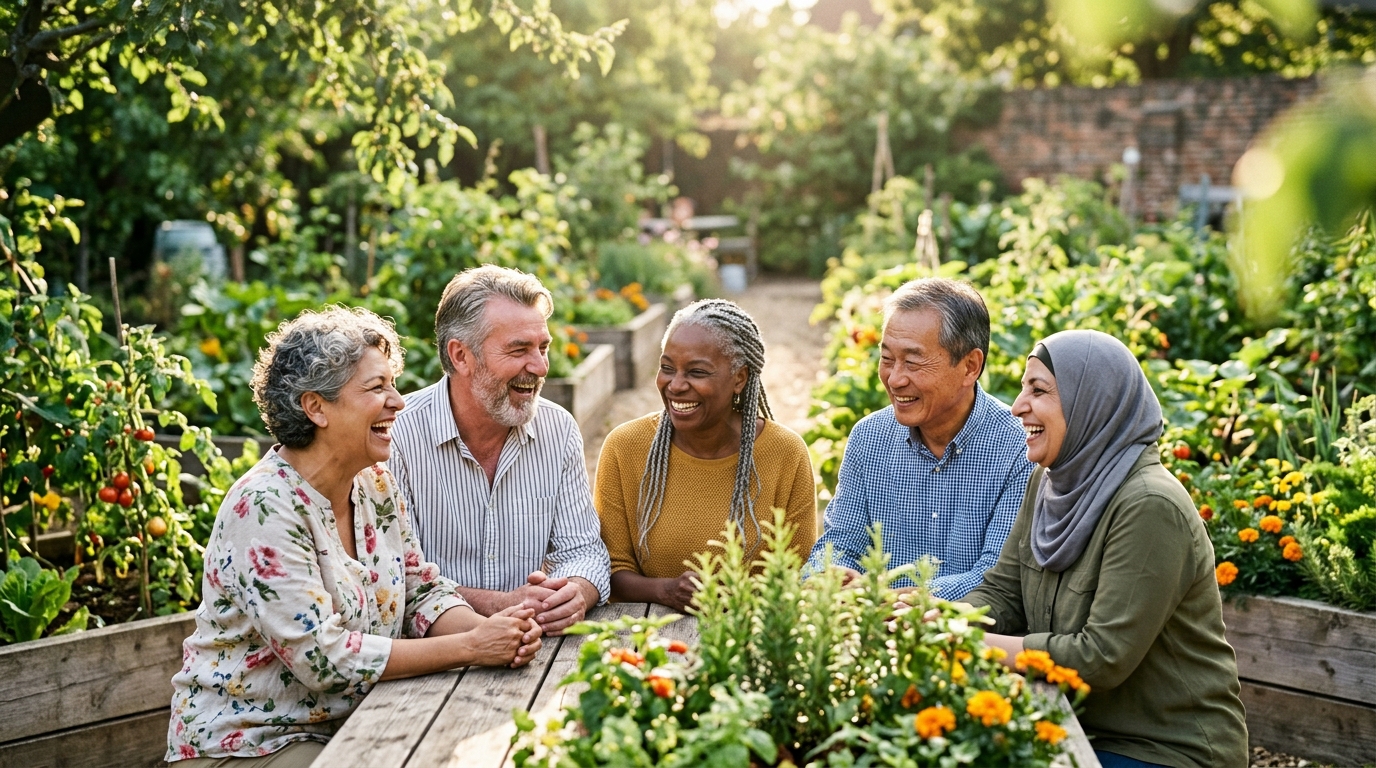
Consider the power of the "third place"—locations that are neither home nor work. This might be your local community garden, a bowls club, or even a regular morning slot at a specific café. The key is to attend the same activity regularly. Familiarity breeds comfort. The first time you go to a weekend walking group at the local botanical gardens, you’re a stranger. By the fourth time, you’re a regular, and by the tenth, you’re the person who knows where the best coffee is afterwards. This gradual building of presence is often how the most solid friendships are formed in midlife.
Ways to integrate new connections into your routine:
- Say "Yes" more often: If an old acquaintance invites you to a gallery opening or a local fundraiser, try to accept, even if you’d normally prefer a quiet night in. You never know who else will be there.
- Volunteering: Contributing your time to a local charity, a school reading program, or an animal shelter connects you with people who share your values. This shared sense of purpose is a powerful social lubricant.
- Casual conversations: Practice being open in everyday situations. Whether it’s a comment about the weather at the supermarket or asking someone at the dog park about their pet, these micro-interactions keep your social energy high.
- Friends of friends: Don’t be afraid to let your current friends know you’re keen to meet new people. Often, they have other friends in similar situations, and a group dinner or a weekend BBQ is the perfect setting for an introduction.
It’s also worth considering online dating as a tool in your kit, rather than the entire workshop. While it can be a great way to meet people you wouldn't otherwise cross paths with, it works best when it complements an active "offline" life. Using an app to find a date while also attending a local photography club gives you multiple avenues for connection, reducing the pressure on any single interaction to be "the one."

Staying open without the pressure of expectations
One of the biggest hurdles to meeting new people after 50 is the internal pressure we place on every new interaction. When our social circle is small, we might feel a sense of urgency to make every new acquaintance a "best friend" or every first date a "soulmate." This pressure is often palpable and can inadvertently push people away. The most successful approach is to stay open and curious, without forcing a specific outcome. Every person you meet is a chance to learn something new or hear a story you haven't heard before, even if they don't become a permanent fixture in your life.
It is important to manage disappointment. Not every walking group will be a hit, and not every coffee date will lead to a second one. Sometimes, you might join a class and realise the group dynamic isn't right for you. This isn't a failure; it's simply data. It tells you what you *don't* want, which brings you closer to finding what you *do*. If an activity doesn't lead to a romantic spark or a deep friendship immediately, try to appreciate it for the social stimulation it provided in the moment. Expanding your social life is worthwhile for your own well-being, regardless of whether it results in a relationship.
"Treat socialising as an exploration of your community, rather than a quest for a specific person."
Focusing on building friendships is just as valuable as looking for romance. In fact, a robust network of friends often becomes the very foundation upon which a new romantic relationship is built. Friends introduce you to their friends, they provide support when a date doesn't go well, and they keep your life rich and interesting. When you are genuinely engaged in your own life and your own community, you naturally become more attractive to others. There is a certain magnetism in someone who is passionate about their Saturday morning tennis match or their volunteer work at the local heritage site.
Keep your interactions gender-neutral and inclusive. The person you hit it off with at a book club might not be a romantic prospect, but they might have a brother, a sister, or a friend who is perfect for you. By being open to everyone, you widen the "top of the funnel" of your social life. This approach allows relationships to develop at their own pace, moving from "acquaintance" to "friend" to perhaps something more, without the awkwardness of a forced connection.
Ultimately, meeting new people in your 50s and 60s is about creating more opportunities for genuine, regular interaction. It’s about putting yourself in the path of "planned serendipity." By consistently showing up in spaces that reflect your interests and staying open to the people you find there, you’ll find that your social circle doesn't just grow—it becomes more aligned with the person you are today. A wider social life is a gift you give yourself; it brings new perspectives, new laughs, and the quiet confidence that comes from knowing you are part of a community. Romance may well follow, but the vibrant life you build in the meantime is a reward all its own.